





You’ve finally tamed the chaos of pot lids, only to panic that your new hanging lid holder might secretly be chewing up your cabinet doors like a midnight snack.
Relax—use padded hooks, weight limits, and proper installation as shown in this cabinet strength guide to keep doors safe and damage-free.
🔧 How Hanging Lid Holders Attach and Potential Stress Points on Doors
Most hanging lid holders hook over the top of the cabinet door or screw into the wood. Both methods create pressure at small contact points.
When weight and motion focus on these points, the hinges, corners, and door surface can slowly bend, loosen, or show wear over time.
1. Over-the-Door Hooks and Top Edge Pressure
Over-the-door styles press on the top edge. Thin doors or soft wood can dent or compress under repeated opening and closing.
- Check door thickness before installing.
- Use felt pads to spread pressure.
- Avoid slamming the door.
2. Screw-Mounted Holders and Fastener Stress
Screws give a solid hold but focus stress around each hole. On weak or hollow doors, this can cause cracks or splits over time.
- Pre-drill small pilot holes.
- Use short screws for cabinet doors.
- Avoid mounting near door edges.
3. Hinge Alignment and Added Load
Extra weight from lids pulls on hinges. If hinges are loose or low quality, the door may sag or rub against the frame.
| Sign | Cause |
|---|---|
| Door drops | Hinge screws loosening |
| Rubbing frame | Door slightly warped |
| Clicking noise | Hinge under strain |
4. Surface Wear from Racks and Moving Lids
Metal-on-paint contact can leave marks. Moving lids may scratch the finish if the rack has sharp edges or no protective coating.
- Choose racks with smooth, coated metal.
- Add clear bumpers behind contact points.
- Clean dust and grit that can scratch.
🪚 Weight Limits: When a Lid Holder Becomes Too Heavy for Cabinets
Cabinet doors are built to carry their own weight and normal use. Heavy lid holders with cast-iron lids can push doors beyond safe limits.
Knowing door material, hinge type, and total lid weight helps you avoid distortion, loose screws, and long-term hinge damage.
1. Typical Safe Load Ranges by Door Type
Different doors handle weight differently. Solid wood carries more than thin MDF or particleboard, which bend faster under hanging loads.
| Door Type | Suggested Max Rack Load |
|---|---|
| Solid wood | 5–7 kg (11–15 lb) |
| MDF / particleboard | 3–4 kg (7–9 lb) |
| Framed with thin panel | 2–3 kg (4–7 lb) |
2. Example Load Comparison for Common Lid Materials
Heavier lid sets stress doors far more than light glass or aluminum. Monitoring total weight helps you plan safe storage.
3. Signs Your Door Is Overloaded
Watch for small changes. They warn you early that the holder and lids are too heavy for the door and hinges.
- Door no longer closes smoothly.
- Gap between door and frame increases.
- Screws at hinges or rack feel loose.
4. Safer Alternatives for Heavy Lids
If your lids are heavy, move storage to walls or inside cabinets. This spreads weight across stronger mounting points.
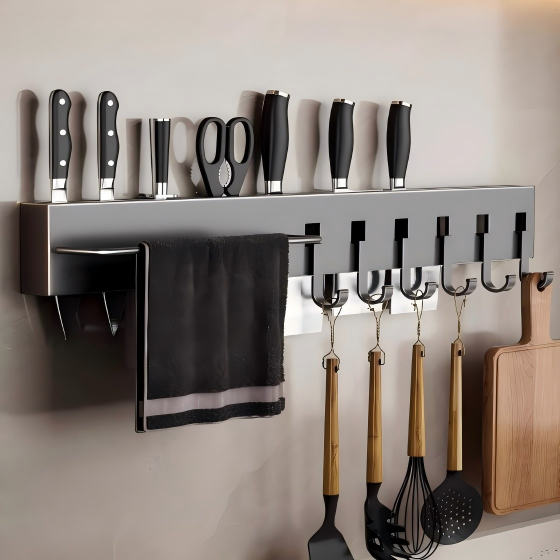
- Use a Kitchen gray pot lid rack storage overhead room aluminum kitchen rack chopping board rack for wall mounting.
- Place cast-iron lids on shelves, not doors.
- Keep only light lids on hanging door racks.
🧰 Cushioning and Pads: Preventing Scratches and Pressure Marks on Doors
Proper cushioning spreads contact and stops metal from digging into paint, veneer, or wood. This greatly reduces risk of marks and dents.
Simple pads, bumpers, and tapes cost little but protect doors for years, even with daily cabinet use and frequent door movement.
1. Types of Protective Pads to Use
Choose soft materials that grip well and do not stain. Apply wherever rack parts touch the door.
- Felt dots for top edges and corners.
- Silicone bumpers to absorb impact.
- Rubber strips under metal bars.
2. Where to Place Pads for Best Protection
Correct placement matters more than pad size. Focus on high-pressure points and moving contact areas.
| Location | Why It Matters |
|---|---|
| Top edge | Supports hanging weight |
| Behind lower bars | Stops rubbing marks |
| Near corners | Reduces twist stress |
3. Maintenance: Replace Worn Pads Regularly
Pads flatten over time. Check them when you clean cabinets and replace any that crack, slip, or lose grip.
- Inspect pads every three to six months.
- Clean dust before applying new pads.
- Choose high-quality, non-marking materials.
🧪 Moisture, Steam, and Long‑Term Effects on Cabinet Door Finish
Steam from cooking can slip behind hanging lid holders, trapping moisture. Over years, this can soften finishes and swell weak panels.
Good rack design, ventilation, and regular drying keep your cabinet doors looking clean and reduce peel, bubbles, and mold risk.
1. How Steam Affects Paint, Veneer, and Laminate
Repeated steam cycles slowly break down surface coatings, especially at edges, joints, and screw holes where water can enter.
- Paint can peel or discolor.
- Veneer may lift at corners.
- Laminate edges can swell.
2. Placement Tips to Reduce Moisture Damage
Keep hanging lid holders away from direct steam paths like right above kettles or saucepans when possible.
| Placement | Moisture Risk |
|---|---|
| Above cooktop | High |
| Beside range | Medium |
| Opposite wall | Low |
3. Cleaning and Drying Habits That Protect Finish
Wipe down doors and racks after heavy cooking days. Dry metal parts so moisture does not sit against the cabinet surface.
- Use a soft, dry cloth after steam-heavy cooking.
- Open doors briefly to air dry inside.
- Clean mild grease to stop dirt from bonding.
🏠 Why Wenhai Home Lid Holders Protect Cabinets Better Over Time
Well-designed organizers share weight, protect contact points, and resist rust. These features lower long-term stress and damage to cabinet doors.
Wenhai Home focuses on stable structure, protective finishes, and flexible mounting so storage works with, not against, your cabinets.
1. Stable Structures That Spread Weight Safely
Thoughtful frame designs rest on broader areas, so force does not land on just one sharp metal bar or corner.
- Wide brackets support more surface.
- Balanced frames reduce twist on hinges.
- Sized for real-world lid weights.
2. Protective Coatings and Rust-Resistant Materials
Quality coatings cut friction and resist rust. That means fewer scratches and stains where metal meets the cabinet door.
- Gray aluminum and carbon steel options.
- Smooth finishes that clean easily.
- Reduced chance of rust marks on paint.
3. Flexible Mounting Options for Different Kitchens
Wenhai offers wall-mounted, glue-on, and screw options, so heavy items can move off fragile doors onto stronger walls or panels.
- Wall-Mounted Spice Rack, Multi-Functional Storage, Gray Carbon Steel, Kitchen keeps weight off doors.
- Kitchen storage rack, double installation without nail glue/screw, kitchen finishing avoids drilling doors.
- Mix door, wall, and in-cabinet storage for balance.
Conclusion
A hanging lid holder can damage cabinet doors if it is too heavy, poorly padded, or placed in a damp, high-steam area.
Choose the right mounting style, control weight, add pads, and maintain both rack and door. This keeps your storage neat while protecting hinges, finishes, and door structure.
Frequently Asked Questions about hanging pot lid holder
1. Will any hanging lid holder damage my cabinet door?
No. Light racks with good padding and proper weight limits are usually safe. Problems come from heavy lids, weak doors, and no protection at contact points.
2. How much weight is safe on a cabinet door rack?
Many doors stay safe under 3–4 kg of total lid weight. Solid wood may handle more, while thin MDF or framed doors should stay on the lighter side.
3. How can I stop scratches from a metal lid holder?
Add felt or silicone pads wherever the rack touches the door, choose coated metal, and wipe away dust or grit that can act like sandpaper.
4. Is it better to mount lid holders on doors or walls?
Walls and solid cabinet sides are safer for heavy lids. Use doors for light, often-used lids, and shift heavy items to a stable wall rack.
5. Can steam from cooking ruin the door behind my lid holder?
Over time, yes. Steam can fade finishes and swell weak panels. Keep racks away from direct steam, and dry doors and racks after heavy cooking.
 Privacy settings