





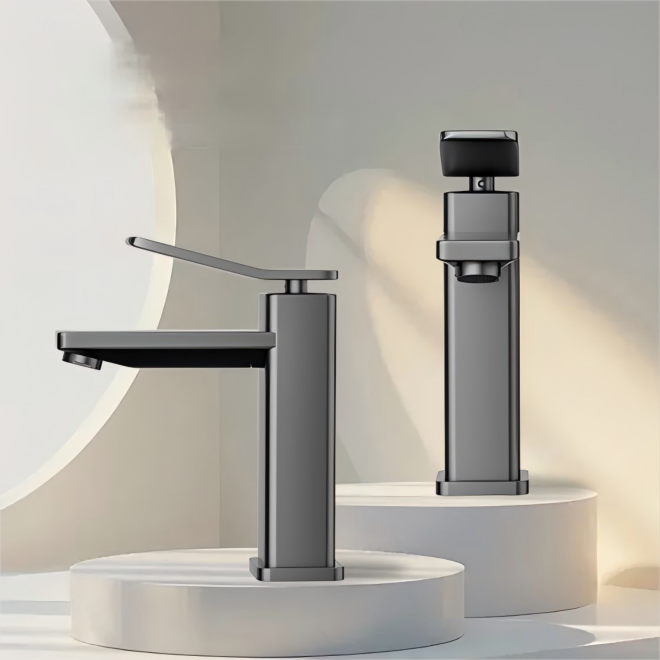
Turn on your basin mixer tap and get a sad drizzle instead of a mighty waterfall? Don’t worry, your bathroom isn’t judging you—it just needs a little help to find its pressure again.
This guide shows you simple checks for blockages, valves, and aerators, plus when to call a plumber. For more on low water pressure causes, see this WaterSafe report.
🚰 Common household causes of low basin mixer tap water pressure
Low water pressure at a basin mixer tap usually comes from simple household problems. Checking these first can often fix weak flow without major plumbing work.
Focus on the tap, nearby valves, and local pipework before assuming a wider supply issue that affects your whole home.
1. Partially closed isolation or stop valves
Valves under the basin or at the main supply may not be fully open. Even a half-closed valve can reduce water flow a lot.
- Look under the sink for individual isolation valves.
- Turn them gently anti‑clockwise to fully open.
- Check the main stopcock near the entry point of your water supply.
2. Clogged aerator or mixer cartridge
Mineral deposits and small debris can build up in the aerator or cartridge, restricting both hot and cold flow through the tap.
- White scale often points to hard water issues.
- A blocked aerator usually causes a thin, scattered spray.
- A damaged cartridge can cause uneven hot and cold pressure.
3. Kinked or twisted flexible hoses
Flexible hoses that connect the basin mixer tap to the pipework can twist, fold, or flatten, especially after recent installation or DIY work.
| Sign | Likely Hose Issue |
|---|---|
| Good pressure, then sudden drop | Hose moved and kinked |
| Only hot or only cold is weak | Single hose restricted |
4. Old or unsuitable tap design
Very old or poor‑quality mixer taps may have narrow internal passages that scale up quickly and restrict flow, especially in hard water areas.
- Modern mixers handle low and high pressure better.
- Upgrading can fix pressure and improve comfort.
- Choose designs made for your system pressure.
🔧 How to check your basin mixer tap’s aerator for blockages
The aerator at the spout tip mixes air with water and controls flow. When blocked, it is one of the quickest and easiest parts to inspect and clean.
Regular checks keep your basin mixer tap running smoothly and protect your cartridge and internal parts from extra strain.
1. Locate and remove the aerator
The aerator usually screws into the end of the spout. Some are hidden, while others have a visible ring you can grip by hand or with tools.
- Use a cloth and adjustable spanner to avoid scratches.
- Turn anti‑clockwise to remove.
- Note the order of internal parts for reassembly.
2. Inspect for limescale and grit
Hold the aerator up to the light. Look for white scale, sand‑like particles, or rust flakes trapped in the mesh or small holes.
| Build‑up Type | Common Source |
|---|---|
| White crust | Hard water limescale |
| Brown or red grains | Rust from old pipes |
| Fine sand or dirt | Recent pipework or supply work |
3. Clean or soak the aerator
Most aerators clean well with a soak in vinegar and a soft brush. Avoid sharp tools that can tear the mesh or rubber seals.
- Soak in white vinegar for 30–60 minutes.
- Brush gently with an old toothbrush.
- Rinse well before reinstalling.
4. Compare flow before and after cleaning
Checking flow before and after cleaning shows how much the blockage affected pressure. You can track improvements and decide if replacement is needed.
🧼 Simple cleaning steps to improve basin mixer tap water flow
Simple cleaning can quickly restore pressure at your basin mixer tap, especially when mineral deposits and small particles affect the spout or cartridge.
Use basic household tools and gentle cleaners first, then move to deeper cleaning only if flow remains weak.
1. Flush the tap without the aerator
After removing the aerator, briefly run water to flush trapped grit. This prevents new debris from blocking the freshly cleaned aerator again.
- Open both hot and cold fully.
- Run for 10–20 seconds only.
- Check for clear, straight water streams.
2. Clean around the spout and handle
Scale can form around the spout base and handle. Wiping these areas keeps movement smooth and reduces wear on seals and cartridges.
| Area | Cleaning Tip |
|---|---|
| Spout base | Wrap a vinegar‑soaked cloth for 15 minutes |
| Handle | Wipe with mild soap and water |
3. Consider a full tap service or upgrade
If cleaning does not solve the low pressure, the internal cartridge or body may be worn. In that case, a full service or new tap can be better.
- Check if spare cartridges are available.
- Compare labor cost with a full replacement.
- Upgrading can add water‑saving and swivel features.
🏠 When pipework issues reduce pressure at a single basin mixer tap
Sometimes the cause is not the tap itself but the short section of pipework that feeds it, especially after recent repairs or bathroom upgrades.
Careful checks can find hidden bends, blockages, or pressure changes that only affect one basin mixer tap in your home.
1. Check if other fixtures have good pressure
Compare flow at nearby taps and the shower. If only one basin mixer is weak, the problem is likely close to that tap.
- Test hot and cold separately.
- Note which rooms have normal flow.
- Check both upstairs and downstairs where possible.
2. Look for recent plumbing changes
New work can leave solder, debris, or partial blockages in small pipes. Flexible hoses can also be over‑tightened or misrouted.
| Recent Change | Possible Effect |
|---|---|
| New vanity or basin | Kinked hoses behind drawers |
| Pipe rerouting | Extra elbows reducing pressure |
3. Consider low‑pressure systems and tap compatibility
Some mixer taps need higher supply pressure. On gravity systems or older pipework, an unsuitable tap can feel weak even when the supply is normal.
- Check your boiler or tank type.
- Choose taps rated for low pressure if needed.
- Use wide‑bore hoses to reduce loss.
✅ When to call a plumber or choose Wenhai Home replacement products
If basic checks and cleaning do not restore good flow, it may be time to call a plumber or choose a quality replacement basin mixer tap.
Wenhai Home offers well‑designed taps that work smoothly and help avoid repeated low‑pressure problems.
1. Signs you need professional help
Serious leaks, sudden drops in pressure, or signs of pipe corrosion need expert attention. Do not ignore damp patches or ongoing drips.
- Water stains on walls or cabinets.
- Noise in pipes when taps open.
- Low pressure in several rooms at once.
2. Upgrading to a modern, efficient basin mixer tap
When your tap is old, stiff, or badly scaled, replacement is often faster and more cost‑effective than constant repairs and cleaning.
- Consider a Single-Handle Basin Faucet, 360° Swivel, Polished Chrome, Bathroom Sink for easy everyday use.
- Use a Bathroom sink faucets, wall-mounted bathroom faucet, brass, single handle to free counter space and simplify cleaning.
- Choose an OEM/ODM Basin Faucet, Swivel Splash-Proof, Hot & Cold, Black Aluminum for stylish, splash‑controlled performance.
3. Planning for long‑term reliability
Choosing a solid brass body, reliable cartridge, and suitable pressure rating reduces future faults. This helps keep water flow strong and stable for years.
| Feature | Benefit |
|---|---|
| Quality cartridge | Smoother handle action |
| Durable finish | Less staining and easier cleaning |
Conclusion
Low basin mixer tap water pressure often comes from simple causes like blocked aerators, closed valves, or kinked hoses. These are usually quick to inspect and clean at home.
When basic steps fail, consider pipework checks and a quality replacement tap. Choosing reliable Wenhai Home products helps keep pressure strong, comfortable, and easy to control.
Frequently Asked Questions about hot and cold tap for basin
1. Why is my hot water pressure lower than my cold at the basin?
Hot water often runs through longer, narrower pipes or a tank system. Any scale, air, or partial blockage in this line can reduce hot pressure compared with cold.
2. Can a mixer tap cause low pressure on one side only?
Yes. A worn or blocked cartridge inside the mixer can restrict either hot or cold more than the other, even when your supply pipes are fine.
3. How often should I clean my basin mixer tap aerator?
In hard water areas, clean it every three to six months. If you notice a weak or uneven spray, clean it sooner to restore normal flow.
4. Do I need a special tap for low‑pressure systems?
Yes. On gravity or low‑pressure systems, choose taps rated for low pressure with wide internal passages. This helps maintain a comfortable, steady water flow.
5. When should I replace rather than repair my basin mixer tap?
If the tap is very old, often leaks, or stays weak after cleaning and simple fixes, replacement with a modern, efficient mixer is usually the best choice.
 Privacy settings