





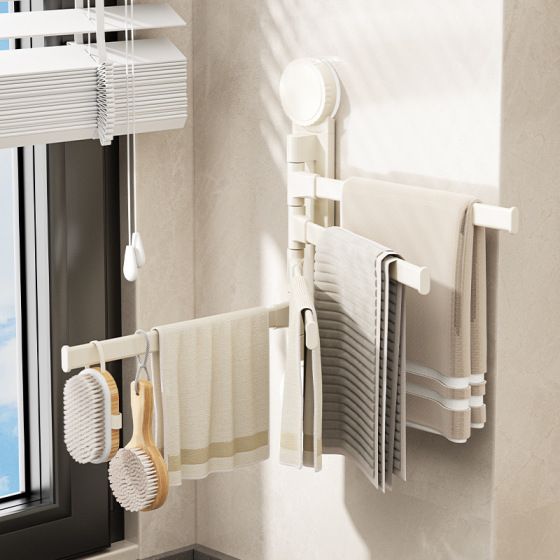
You’re staring at your steamy bathroom, juggling damp towels like a circus act, wondering if a wall mounted or freestanding rotating towel rail will finally end the “why is nothing ever dry?” household drama.
To fix it, match the rail to your space, mounting options, and drying needs; research shows good ventilation and proper spacing help towels dry faster according to CDC towel care guidance.
🧱 Space efficiency: choosing between wall mounted and freestanding towel rails
Rotating towel rails save space by letting each arm swing away from the wall. Your choice between wall mounted and freestanding models depends on layout, renters’ needs, and storage habits.
Wall mounted rails free floor area, while freestanding units move easily between rooms. Think about door swing, shower zone, and daily traffic before you decide.
1. Wall mounted: best for tight floors
Wall mounted rotating rails keep the floor clear and control clutter.
- Use unused vertical wall zones above toilets or radiators.
- Pair with a Wall Mounted Towel Rack, Foldable Double-Layer, Space-Saving, Aluminum to stack family towels.
- Great for small apartments and narrow guest baths.
2. Freestanding: flexible placement
Freestanding rotating rails move wherever you need them.
- Ideal for renters who cannot drill into tiles or drywall.
- Shift from bathroom to laundry on wash days.
- Choose a wide, heavy base for better stability.
3. Mixed storage zones
Combine wall mounted and freestanding rails for busy homes.
- Use a fixed rail near the shower and a freestanding rail near the vanity.
- Keep wet towels separate from clean ones.
- Help guests see exactly where to hang towels.
4. Saving space beyond towels
Wall systems can handle more than towels.
- Mount a Wall Mounted Broom & Mop Rack, Adjustable, Space-Saving, Aluminum/ABS in utility areas.
- Add hooks and shelves for robes and bath tools.
- Keep floors easier to clean and safer.
🧼 Bathroom layout: matching rail type to room shape and size
The room shape often guides whether wall mounted or freestanding rotating towel rails work better. Measure clearances and door swing to avoid blocked paths and crowded corners.
Use short rails in compact rooms and multi-arm versions in wide, open bathrooms. Corners, niches, and unused wall ends often give the best performance.
1. Using corners and niches well
Corners are strong spots for wall mounted rails.
- Install near the shower but away from direct spray.
- Combine with a Wall-Mounted Shower Corner Shelf, Dual Installation, Aluminum, Multi-Room Use for soaps and bottles.
- Rotate arms toward the open floor for faster drying.
2. Layout comparison data: space vs capacity
The chart below shows a simple comparison of space use and towel capacity for three layouts: small, medium, and large bathrooms.
3. Narrow bathrooms
In long, narrow rooms, wall mounted rails make walking easier.
| Feature | Wall mounted | Freestanding |
|---|---|---|
| Walkway width | Stays wide | Can feel tight |
| Trip risk | Very low | Higher if base is large |
4. Large family bathrooms
Big rooms can mix rail types for better reach.
- Place a freestanding rail near the tub for kids.
- Mount a rotating rail beside each vanity for hand towels.
- Allow at least 40–50 cm swing space per arm.
🔧 Installation and stability: mounting requirements vs freestanding base support
Wall mounted rotating towel rails depend on solid anchors, while freestanding units rely on base weight and footprint. Match installation to your wall type and users.
Plan for splash zones, child safety, and cleaning access before you choose hardware or sealants.
1. Wall conditions and anchors
Check the wall before you drill.
- For tile, use proper masonry bits and wall plugs.
- On drywall, anchor into studs or use heavy-duty toggles.
- Seal around holes in wet zones to avoid moisture damage.
2. Freestanding base stability
Freestanding rotating rails must resist tipping.
- Pick a low, wide base with non-slip pads.
- Place away from tight door swings and children’s play paths.
- Do not overload arms beyond the maker’s rating.
3. DIY vs professional help
Some setups need expert tools.
| Situation | DIY | Pro install |
|---|---|---|
| Simple drywall | Often fine | Optional |
| Glass / stone tile | Risk of cracks | Recommended |
| Heated walls | Not advised | Required |
🌡️ Drying performance: airflow, rotation angle, and towel capacity differences
Drying power depends on airflow, spacing, and how freely each arm rotates. Good design cuts odors, mold, and frequent laundries.
Think about how many towels you hang daily and how quickly the bathroom clears steam after showers.
1. Airflow and spacing
Leave air gaps between towels.
- Rotate each arm away from the wall to open both sides.
- Aim for at least a hand’s width between hanging towels.
- Place near vents or windows for better air movement.
2. Rotation angle and reach
The swing angle controls ease of use.
| Angle | Use case | Benefit |
|---|---|---|
| 90° | Tight corners | Safe near doors |
| 180° | Standard walls | Good access |
| 360° | Open spaces | Max airflow |
3. Capacity vs drying speed
Overloading slows drying and causes smell.
- Use more arms, not more layers on one arm.
- Reserve one arm for hand towels; others for bath sheets.
- In humid homes, choose thinner, faster-drying towels.
🏡 Style, safety, and maintenance tips with Wenhai Home rotating towel rails
Rotating towel rails from Wenhai Home blend clean lines with strong aluminum builds, giving you durable, rust-resistant storage for modern or classic bathrooms.
Match finishes and shapes across racks, shelves, and hooks to keep a calm, organized look that is also easy to clean each week.
1. Coordinated bathroom style
Keep hardware consistent.
- Choose one finish—brushed, matte black, or chrome—and repeat it.
- Use slim arms for minimalist rooms; thicker profiles for bold looks.
- Align rail height with existing towel bars for visual balance.
2. Safety for kids and seniors
Plan for easy, safe reach.
- Mount rails at shoulder height of the shortest user.
- Avoid sharp corners near walkways or shower entries.
- Ensure arms move smoothly without sudden snap-back.
3. Cleaning and long-term care
Regular care protects the finish.
| Task | Frequency | Tips |
|---|---|---|
| Wipe surfaces | Weekly | Use mild soap, soft cloth |
| Check screws / base | Every 3 months | Tighten loose parts |
| Inspect for rust | Twice a year | Dry fully after deep cleaning |
Conclusion
Wall mounted rotating towel rails save floor space and feel built-in, while freestanding rails offer flexible placement and no drilling. Your choice should match layout, wall type, and who uses the bathroom daily.
Focus on airflow, safe reach, and stable support. With a well-planned setup, towels dry faster, bathrooms stay neater, and hardware lasts longer.
Frequently Asked Questions about rotating towel rail
1. Are wall mounted rotating towel rails safe on tiled walls?
Yes, if you use the right drill bits, anchors, and sealant. Always drill slowly into tile, avoid grout lines, and follow the maker’s load limits.
2. How many towels can a rotating rail hold?
Most 3–4 arm rails hold three full bath towels or two bath towels plus two hand towels. Avoid stacking more than one towel per arm for best drying.
3. Do rotating towel rails rust in humid bathrooms?
Quality aluminum or stainless-steel rails resist rust well. Wipe off standing water, avoid harsh cleaners, and check screws to keep corrosion away.
4. Which is better for renters: wall mounted or freestanding?
Freestanding rails are usually better for renters, as they need no drilling. If you use wall mounted rails, confirm rules and use minimal, repairable fixings.
5. Can I use rotating towel rails outside the bathroom?
Yes. Many people use them in laundry rooms, pools, and mudrooms for wet clothes and sports gear. Just confirm the material suits the moisture level.
 Privacy settings