





Your shower used to feel like a spa, but now it spits, dribbles, and sprays sideways like it’s in a bad mood. The handheld wand? Perfect—if you enjoy surprise cold blasts and wrestling with a tangled hose.
We’ll fix that with simple cleaning, quick hose checks, and regular descaling, so both showerhead and handheld spray smoothly again. These steps match expert advice on keeping fixtures clear of mineral buildup, as noted by the U.S. EPA WaterSense showerhead guide.
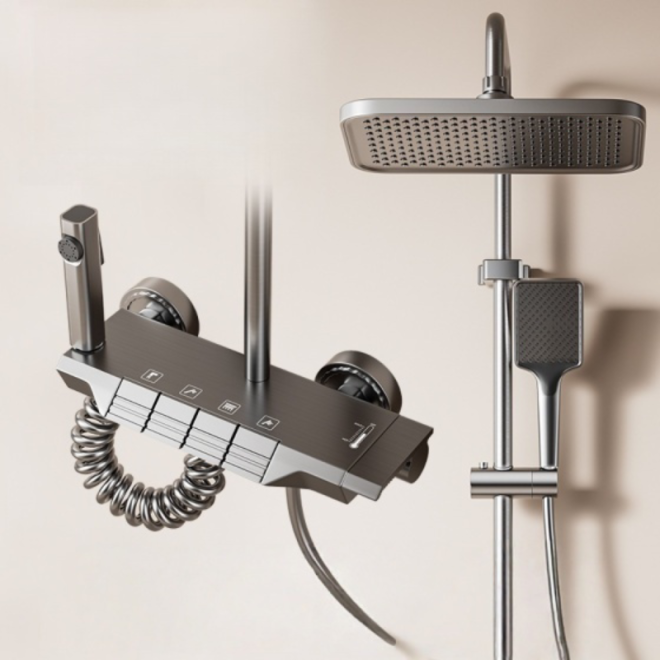
🛁 Understanding Your Shower and Handheld Combo: Basic Parts and Functions
Your shower and handheld combo includes several simple parts that work together for comfort, safety, and water savings. Knowing each part helps you clean, adjust, and repair with confidence.
This guide explains the main pieces, how they connect, and why regular care keeps water flow strong and your bathroom looking fresh.
1. Main Showerhead and Spray Modes
The main head controls most water flow. Many models offer different spray modes for comfort and cleaning.
- Rain or wide spray for daily showers
- Massage spray to relax muscles
- Mixed spray for quick rinsing
- Eco mode to save water and energy
2. Handheld Head, Hose, and Bracket
The handheld lets you reach all areas and makes cleaning easier. The hose and bracket keep it stable and safe.
| Part | Main Role |
|---|---|
| Handheld head | Directs water where you need it |
| Flexible hose | Allows movement and reach |
| Wall bracket | Holds handheld in place |
3. Diverter Valve and Mixer
The diverter switches water between the main head and handheld. The mixer blends hot and cold water for a safe, steady temperature.
- Turn knob or lever to choose outlet
- Adjust handle slowly to avoid sudden heat
- Check for smooth movement and no sticking
4. Hoses, Seals, and Mounting Hardware
Rubber washers, O-rings, and screws prevent leaks and hold the system tight to the wall.
- Inspect washers every few months
- Tighten loose nuts gently by hand
- Avoid over-tightening metal parts
🧽 Routine Cleaning Steps to Prevent Soap Scum and Hard Water Buildup
Regular cleaning keeps your shower and handheld combo bright, safe, and free from soap scum and limescale. A few weekly steps avoid costly repairs later.
Use mild cleaners, soft cloths, and quick rinses after each shower to reduce buildup and keep water flowing smoothly.
1. Daily Quick Rinse and Wipe
After each shower, rinse walls and fixtures with warm water and wipe surfaces dry. This simple habit stops most soap scum before it sticks.
- Spray warm water over tile and glass
- Use a squeegee on doors and walls
- Wipe the handheld and hose with a soft cloth
2. Weekly Deep Clean for Heads and Handles
Once a week, clean the showerhead, handheld, and controls with a gentle, non-abrasive bathroom cleaner or vinegar solution.
- Spray cleaner on a cloth, not directly on controls
- Focus on joints, seams, and spray nozzles
- Rinse well and dry to prevent spots
3. Monthly Check: Grout, Seals, and Hose
Each month, inspect grout, silicone, and hose connections. Catch small cracks or leaks early to stop mold and water damage.
| Item | What to Check | Action |
|---|---|---|
| Grout | Dark lines or gaps | Clean and re-grout if needed |
| Silicone | Peeling or mold | Remove, dry, and re-seal |
| Hose | Cracks or bulges | Replace worn hose |
4. Data Insight: Cleaning Frequency vs. Buildup
The chart below shows how regular cleaning reduces mineral buildup and keeps water flow strong over time.
🪛 Fixing Common Issues: Leaks, Low Pressure, and Dripping Handheld Heads
Many common shower problems are easy to fix at home. Most leaks and flow issues come from worn washers, scale, or loose fittings.
Work slowly, turn off water when needed, and test after each small change to avoid damage.
1. Stopping Leaks at Joints and Connections
Leaks around the arm, hose, or mixer often mean loose threads or old seals. Replace washers and add fresh plumber’s tape.
- Turn off water if leak is heavy
- Unscrew joint and clean threads
- Wrap threads with tape and re-tighten by hand
2. Solving Low Water Pressure
Low pressure may come from clogged filters, scale in the head, or a partly closed valve. Always check the outlet first.
- Remove showerhead and rinse filter screen
- Descale nozzles with vinegar soak
- Ensure main and angle valves are fully open
3. Fixing a Dripping Handheld Head
If the handheld drips when off, the diverter or internal cartridge may not close fully. Cleaning or replacing these parts often fixes it.
| Cause | Sign | Fix |
|---|---|---|
| Diverter wear | Drip from head only | Clean or replace diverter |
| Cartridge scale | Hard handle movement | Descale or change cartridge |
🌀 Descaling the Showerhead and Handheld for Strong, Even Water Flow
Hard water leaves mineral deposits that block spray nozzles and reduce pressure. Descaling restores full, even flow and improves comfort.
Use mild acids like white vinegar and avoid sharp tools that can scratch finishes or enlarge nozzle holes.
1. Soaking in a Vinegar Solution
Soak the head or handheld in equal parts warm water and white vinegar for 30–60 minutes to loosen limescale safely.
- Remove the showerhead if possible
- Use a bowl or bag tied around fixed heads
- Rinse well and run water for one minute
2. Gently Scrubbing Nozzles
After soaking, use a soft brush or cloth to clear loosened scale. Many silicone nozzles clean easily with a light finger rub.
- Avoid metal brushes or pins
- Focus on blocked or angled jets
- Repeat short soak if needed
3. Preventing Fast Buildup
Simple habits slow new scale formation and keep descaling sessions shorter and easier.
| Habit | Benefit |
|---|---|
| Wipe dry after use | Less standing mineral water |
| Monthly light soak | Stops heavy crusts |
| Use built-in cleaning nozzles | Quick daily scale release |
🏠 When Replacing Parts, Choose Reliable Options from Wenhai Home
When parts wear out, choosing quality replacements improves comfort, safety, and long-term value. Strong materials and smart designs reduce leaks and failures.
Wenhai Home offers tested systems that combine easy use, style, and trusted durability for busy homes and rentals.
1. Upgrading to a Durable 3-Mode System
For everyday use, a sturdy combo like the Shower system, 3-mode, space aluminum, bathroom gives flexible spray options with light, corrosion-resistant space aluminum construction.
- Three clear spray modes for different needs
- Resists rust in humid bathrooms
- Ideal for long-term home upgrades
2. Smart Control with Digital Display Systems
For precise temperature and easy control, consider the Digital Display Shower System with Piano Keys, Space Aluminum, Wall-Mounted - HS-1818, which shows real-time data and uses clear, simple “piano key” buttons.
| Feature | Advantage |
|---|---|
| Digital display | Helps avoid scalding |
| Piano key controls | Easy to use with wet hands |
| Space aluminum | Light, strong, and rust-resistant |
3. Choosing High-Pressure Heads for Hotels and Homes
Boost comfort in low-pressure areas with the High-pressure shower head, 4 mode, hotel/B & B, HS-1803, built for strong, stable flow and easy guest use.
- Four modes for different guest preferences
- Helps keep good flow even with weak supply
- Great for rentals, B&Bs, and family homes
Conclusion
A clean, well-maintained shower and handheld combo gives better comfort, longer life, and fewer repairs. Simple daily and monthly steps keep water flow strong and surfaces bright.
When it is time to replace parts, choose proven Wenhai Home systems for safe temperature control, durable materials, and a modern, user-friendly shower experience.
Frequently Asked Questions about shower and handheld combo
1. How often should I descale my showerhead and handheld?
In hard water areas, descale every 1–2 months. In softer water, every 3–4 months is usually enough, especially if you wipe surfaces dry after use.
2. Can I use bleach to clean my shower system?
Avoid strong bleach on metal or rubber parts. It can damage finishes and seals. Use mild bathroom cleaner or diluted vinegar for regular cleaning instead.
3. Why does my showerhead spray in odd directions?
Clogged or partly blocked nozzles usually cause uneven spray. Soak the head in vinegar, gently rub the nozzles, then rinse and test the flow again.
4. When should I replace the hose on my handheld?
Replace the hose if you see cracks, bulges, rusted fittings, or if it feels stiff and kinks easily. Many homes do this every 3–5 years.
5. Do high-pressure heads increase my water bill?
Not always. Many high-pressure heads use smart design to feel stronger while using the same or even less water than older, basic showerheads.
 Privacy settings