





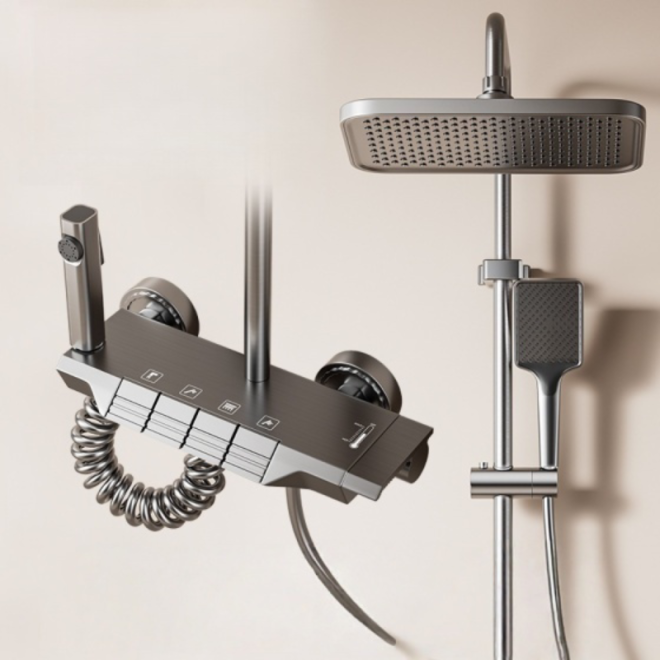
Your “spa-like” multi function shower now hisses, drips, and randomly blasts icy water, turning every rinse into a surprise game show you never entered (and definitely never wanted to host).
This guide shows simple, safe fixes—backed by Consumer Product Safety Commission reports—to repair pressure issues, leaks, and temperature swings so your shower finally works like the luxury upgrade you paid for.
🚿 Low Water Pressure in Multi Function Showers: Causes and Simple Adjustments
Low water pressure in a multi function shower system can weaken rainfall, body jets, and handheld spray. You can often restore strong flow with a few simple checks.
Focus on valves, filters, and shower head settings before calling a plumber. Many fixes take minutes and do not need special tools.
1. Check Main Shutoff and Individual Isolation Valves
Make sure the home’s main valve and any local valves near the shower are fully open. A half-closed valve can quietly cut pressure.
- Locate main valve near water meter.
- Turn handle or lever fully counterclockwise.
- Inspect any access panels for extra isolation valves.
2. Clean or Replace Inlet Filters and Flow Restrictors
Many multi function systems include small mesh filters that trap grit. When clogged, they reduce flow to rain heads and body jets.
- Shut off water and remove trim or hoses.
- Rinse mesh screens under running water.
- Reinstall or replace damaged filters.
3. Adjust Shower Modes and Balance Multiple Outlets
Running many outlets at once can spread pressure too thin. Test each mode alone to see if a single outlet gives better performance.
- Try rain head only, then jets only.
- Close unused outlets when you need strong spray.
- Use a High-pressure shower head, 4 mode, hotel/B & B, HS-1803 for extra boost.
4. Compare Actual Pressure with Local Supply Standards
If all fixtures feel weak, the street supply may be low. A simple gauge on an outdoor tap can confirm the real household pressure.
| Pressure (psi) | Performance |
|---|---|
| 30 or less | Weak, may need booster |
| 40–60 | Normal for most homes |
| 70+ | Strong, use regulator for safety |
🔧 Temperature Fluctuations and Sudden Cold Bursts: Balancing Your Mixer Valve
Rapid hot-cold changes often come from a poorly balanced mixer valve, clogged cartridges, or changes in household water use.
By cleaning, adjusting, and testing the valve, you can keep shower temperature steady and safe for daily use.
1. How Mixer Valves Work with Hot and Cold Supply
The mixer blends hot and cold water to a set level. Any drop in one side can shock the balance and cause sharp temperature swings.
| Issue | Effect on Temperature |
|---|---|
| Hot supply drop | Sudden cold blast |
| Cold supply drop | Sudden hot surge |
| Clogged cartridge | Slow or random changes |
2. Cleaning or Replacing the Thermostatic Cartridge
Mineral buildup inside the cartridge can slow its reaction time. Remove the cartridge, soak in vinegar, or replace if worn.
- Shut off water and remove handle.
- Pull out cartridge and descale.
- Reassemble and test for steady heat.
3. Adjusting the Anti-Scald Limit Stop
The anti-scald stop limits maximum hot water. If set too low, you may chase warmth and trigger changes in other outlets.
- Remove handle cap and access limiter.
- Turn slightly to allow safer, warmer range.
- Test with a thermometer if possible.
4. Balancing Household Usage During Showers
To steady temperature, avoid running washing machines or toilets while showering. Stagger high-demand tasks when possible.
- Shower before laundry cycles start.
- Install pressure-balancing valves if problems persist.
💦 Clogged Nozzles and Sprayers: Easy Cleaning Methods for Better Spray Patterns
Hard water can clog nozzles, weaken spray, and twist patterns. Simple cleaning methods can quickly restore a full and even spray.
Regular maintenance also helps your multi function system last longer and use water more efficiently.
1. Wipe Silicone Nozzles by Hand Each Week
Most modern heads use soft silicone outlets. Rub them gently to break mineral crust and free blocked jets.
- Run warm water.
- Press and rub each nozzle with your thumb.
- Repeat for rain heads, body jets, and handheld units.
2. Deep-Soak Shower Heads in Vinegar
For stubborn buildup, remove the shower head and soak it in white vinegar for a few hours to dissolve scale.
- Unscrew head and place in a bowl.
- Cover outlets with vinegar.
- Rinse well before reinstalling.
3. Upgrade to Easier-Cleaning Multi Function Panels
If clogging is frequent, consider a panel with better materials and nozzle design that reduces buildup and speeds cleaning.
A Multi-function shower, sensor screen display, space aluminum ABS silicone material, shower screen shower offers smooth surfaces and silicone outlets that resist scale and wipe clean quickly.
🧱 Leaks Behind Panels or Handles: Identifying and Sealing Problem Areas Safely
Hidden leaks behind shower panels or handles can soak walls and cause mold. Quick checks help you catch trouble early.
Shut water off before opening trim, and repair seals or fittings at the first sign of moisture.
1. Spot Early Warning Signs of Hidden Leaks
Look for damp drywall, swollen trim, or musty smells around the shower wall. These clues often appear before water is visible.
- Inspect corners and ceiling below the bathroom.
- Check grout lines and silicone joints.
- Note any new stains or peeling paint.
2. Open Access Panels and Test Fittings
Use an existing access panel or remove trim plates to view connections while the water runs. A flashlight helps find small drips.
- Dry the area first with a towel.
- Turn on different shower modes one by one.
- Watch for slow beads around joints.
3. Reseal Trim and Replace Worn Cartridges
Small leaks often come from old cartridges, O-rings, or cracked silicone around escutcheons and panels.
| Component | Common Fix |
|---|---|
| Cartridge/O-rings | Replace and lubricate lightly |
| Trim plate edges | Apply fresh bathroom-grade silicone |
| Panel joints | Reseal and tighten fasteners |
🏠 When Replacement Parts Are Needed: Choosing Wenhai Home for Reliable Components
When parts fail, using reliable components protects performance and safety. Choose products that match your system’s style and technical needs.
Quality materials and precise valves also reduce future maintenance and extend the life of your shower.
1. Match Finish and Style with Existing Fixtures
New parts should blend with your current shower design to keep the bathroom clean and unified.
- Check finish codes (chrome, brushed gold, matte black).
- Confirm trim shape and handle style.
- Review installation measurements.
2. Choose Durable Materials for Daily Use
Look for corrosion-resistant metals and strong surface treatments that handle steam, soap, and regular cleaning.
A Brushed Gold Shower Set, Concealed Rain System, Faucet Included, Bathroom pairs long-lasting brass bodies with a durable finish that resists fading and staining.
3. Work with Wenhai Home for Complete Solutions
Wenhai Home offers matched valves, trims, and heads, so your upgrades fit together and perform correctly as one system.
- Source all main shower parts from one brand.
- Use manuals and diagrams for easy installation.
- Keep model numbers for future replacements.
Conclusion
Multi function shower systems can deliver spa-like comfort, but they need simple care. By checking pressure, cleaning nozzles, and tuning mixer valves, you solve most daily issues quickly.
When parts wear out, select reliable components and smart designs that resist buildup and leaks. This approach keeps your shower safe, strong, and enjoyable for many years.
Frequently Asked Questions about multi function shower system
1. How often should I clean my multi function shower head and jets?
Clean silicone nozzles monthly with a simple rub, and do a deeper vinegar soak every three to six months if you have hard water.
2. Why does my shower go cold when someone flushes a toilet?
The toilet briefly steals cold water, so the mixer sees more hot water and changes the balance. A pressure-balancing or thermostatic valve greatly reduces this problem.
3. Can low water pressure damage my multi function shower system?
Low pressure rarely causes damage, but it can stop body jets and rain heads from working well. Extremely low pressure may also stress pumps or encourage sediment buildup.
4. When should I call a plumber instead of fixing problems myself?
Call a pro if you see hidden leaks in walls, cannot remove a stuck cartridge, or if pressure and temperature stay unstable after basic checks.
5. How do I know if replacement parts will fit my system?
Check the brand, model number, valve type, and rough-in depth. Compare diagrams or consult the supplier to confirm that trims and cartridges match your valve body.
 Privacy settings