





Your pans claim to be “stainless,” yet they stain, warp, and weld eggs to the surface like superglue—leaving you wondering if you accidentally bought decorative cookware instead of something you can actually cook with.
You can fix this by checking stainless grades, core materials, and construction quality before buying, following lab-backed guidance from sources like the NSF cookware performance report so your next set truly earns a spot on the stove.
🍳 Understanding stainless steel grades and what they mean for durability
Stainless steel grades shape strength, rust resistance, and flavor safety. Knowing the grade helps you judge cookware quality fast and buy with confidence.
Focus on food-safe, high-chromium steel and avoid thin, mystery alloys that warp, pit, or stain easily during daily kitchen use.
1. Common grades: 304 vs 316 vs 201
Grades 304 and 316 offer strong corrosion resistance and stable flavor. Grade 201 costs less but can stain faster in salty or acidic cooking.
- 304: Great for daily pans and pots
- 316: Better in salty, acidic dishes
- 201: Budget, but less rust-resistant
2. Why nickel and chromium matter
Chromium builds a rust-resistant layer, and nickel boosts shine and strength. Look for at least 18% chromium on quality stainless cookware labels.
| Element | Main role |
|---|---|
| Chromium | Rust and stain protection |
| Nickel | Shine and toughness |
3. Meaning of 18/10, 18/8, 18/0
These numbers show chromium and nickel content. Higher nickel usually means better shine, stability, and more reliable long-term cooking performance.
- 18/10: Premium, very durable
- 18/8: Strong, common in good pans
- 18/0: No nickel, more likely to discolor
4. When lower grades are still useful
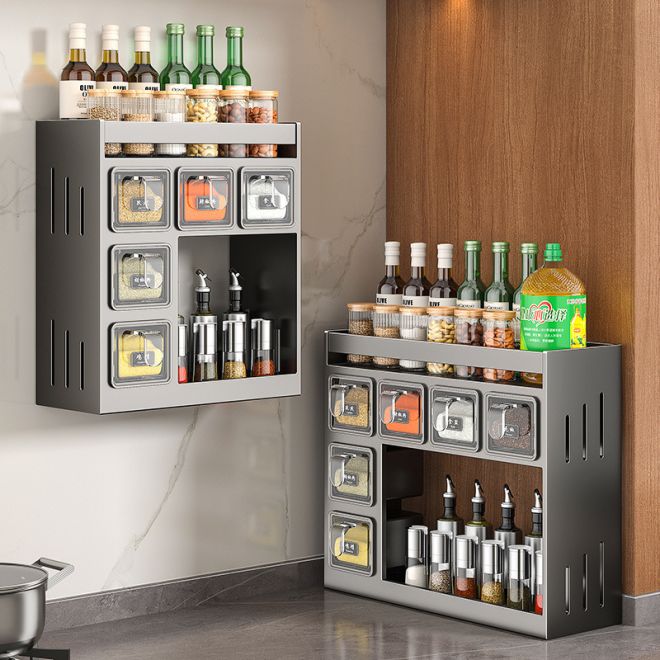
Lower grades can still work in light-use tools or storage. For example, a Wall-Mounted Spice Rack, No-Drill, Space-Saving, Carbon Steel, Kitchen suits dry goods well.
- Use premium grades for high heat
- Save budget on racks and organizers
🔥 The role of cookware thickness and impact-bonded bases in performance
Pan thickness and base design influence heating speed, evenness, and warping. A well-built base keeps food from burning and improves browning.
Thicker, impact-bonded bases spread heat across the whole surface, cutting hot spots and giving you better control at medium and high heat.
1. Ideal thickness ranges for daily cooking
Most home cooks do well with 2.5–3 mm walls. Heavy pots hold heat longer, while thinner ones heat quickly but can warp easily.
| Use | Suggested thickness |
|---|---|
| Frying pans | 2.5–3 mm |
| Saucepans | 2–2.5 mm |
| Stockpots | 2.5–3.5 mm |
2. What is an impact-bonded base?
An impact-bonded base fuses steel with aluminum or copper under high pressure. This gives fast, even heating and stronger, flatter bottoms.
- Aluminum core for quick heat
- Steel exterior for durability
- Less warping on strong burners
3. Simple bar-chart view of pan thickness vs heat evenness
Use the chart below as a visual guide: thicker pans tend to give more even heat but react a bit slower to temperature changes.
4. Thickness needs in compact kitchens
In small kitchens, you may prefer lighter pieces and smart storage, such as a Kitchen gray pot lid rack storage overhead room aluminum kitchen rack chopping board rack to keep counters clear.
- Pick one heavy, one medium pan
- Store vertically to save space
🧲 How to test magnetic compatibility for induction-ready stainless steel cookware
Induction cooktops need a magnetic base. A quick magnet test shows if your stainless steel cookware will heat on induction.
Check the base in several spots to confirm strong pull, then confirm flatness so contact with the induction surface stays tight.
1. The simple fridge-magnet test
Hold a basic fridge magnet to the pan’s bottom. If it sticks firmly, the cookware is induction-ready and should work well.
- Test center of base
- Test near edges too
2. Differences between fully and partly magnetic bases
Some pans only have a magnetic disk in the middle. Full-coverage magnetic bases heat more evenly on wide induction zones.
| Type | Induction performance |
|---|---|
| Partial disk | Hot center, cooler edges |
| Full base | Even heat across pan |
3. Balancing induction use and other cooktops
Induction-ready stainless steel also works on gas and electric. Check labels so one cookware set matches all your heat sources.
- Look for “induction ready” icons
- Flat, thick bases work best
🧼 Surface finish, polish quality, and ease of cleaning in daily use
Surface finish affects sticking, staining, and how fast pans clean up. Smooth, even polish often means better food release.
High-quality finishes resist discoloration and pitting, so your cookware keeps its shine even after strong browning and deglazing.
1. Brushed vs mirror finishes
Brushed finishes hide marks and look calm. Mirror finishes shine more but may show scratches faster while still cleaning easily.
| Finish | Best for |
|---|---|
| Brushed | Heavy daily use |
| Mirror | Display and serving |
2. Signs of a well-polished interior
Run your fingers inside the pan. It should feel smooth, with no sharp edges or rough welds near the handle joints.
- No ripples or deep lines
- Even color with no gray spots
3. Design that supports fast cleanup
Rounded corners, snug lids, and balanced weight speed cleaning. Pair cookware with smart organizers like a Wall-mounted, drilling-free storage rack, detachable, made of carbon steel, lightweight and durable to dry pans neatly.
- Look for rolled rims
- Avoid deep, tight corners
🏆 Why Wenhai Home stainless steel construction ensures consistent, professional cooking results
Wenhai Home focuses on steel choice, base design, and finish. This gives stable heat, safe contact with food, and long service life.
The result is cookware that delivers repeatable searing, simmering, and steaming for home cooks who value pro-level control.
1. Thoughtful selection of stainless steel grades
Wenhai Home uses food-safe, corrosion-resistant stainless steel to reduce rust risks, keep flavors clean, and support daily, high-heat use.
- Balanced chromium and nickel
- Designed for active kitchens
2. Strong, stable bases built for real kitchens
Impact-bonded, multi-layer bases help keep pans flat and responsive. You gain steady browning and fewer burnt spots on sauces.
| Feature | Benefit |
|---|---|
| Thick core | Even heat |
| Flat base | Better contact |
3. Finishes tuned for daily comfort
Smooth interiors, tidy welds, and smart balance make Wenhai Home cookware pleasant to handle, easy to clean, and visually calm in any kitchen.
- Comfortable grip handles
- Surfaces that release food well
Conclusion
To judge stainless steel cookware quality, check grade, thickness, magnetic base, and finish. These details guide how pans heat, clean, and last over time.
By reading labels, feeling surfaces, and doing simple tests, you can choose pieces that cook evenly, resist rust, and stay useful for years.
Frequently Asked Questions about kitchenware
1. Is stainless steel safer than nonstick pans?
Stainless steel has no flaking coating and handles high heat well. It is safe for browning, deglazing, and oven use when properly cared for.
2. Why does food stick to stainless steel?
Food sticks when the pan is too cool, too hot, or too dry. Preheat, add oil, then add food to improve release and browning.
3. Can stainless steel go in the dishwasher?
Most stainless steel is dishwasher-safe, but hand washing helps keep shine. Avoid harsh cleaners and long soaks in salty or acidic water.
4. Do I need special utensils for stainless steel?
You can use metal tools, but wood or silicone reduces scratches and noise. Avoid sharp scraping on the interior whenever possible.
5. How long should quality stainless steel cookware last?
With moderate heat, gentle cleaning, and proper drying, good stainless steel cookware can last many years, often decades, without major performance loss.
 Privacy settings